The Joint General Assembly organized by VERIFY and CHE projects was successfully held with more than 100 participants for the 5 sessions (two hours each) distributed over 3 days from 7 to 9 July.
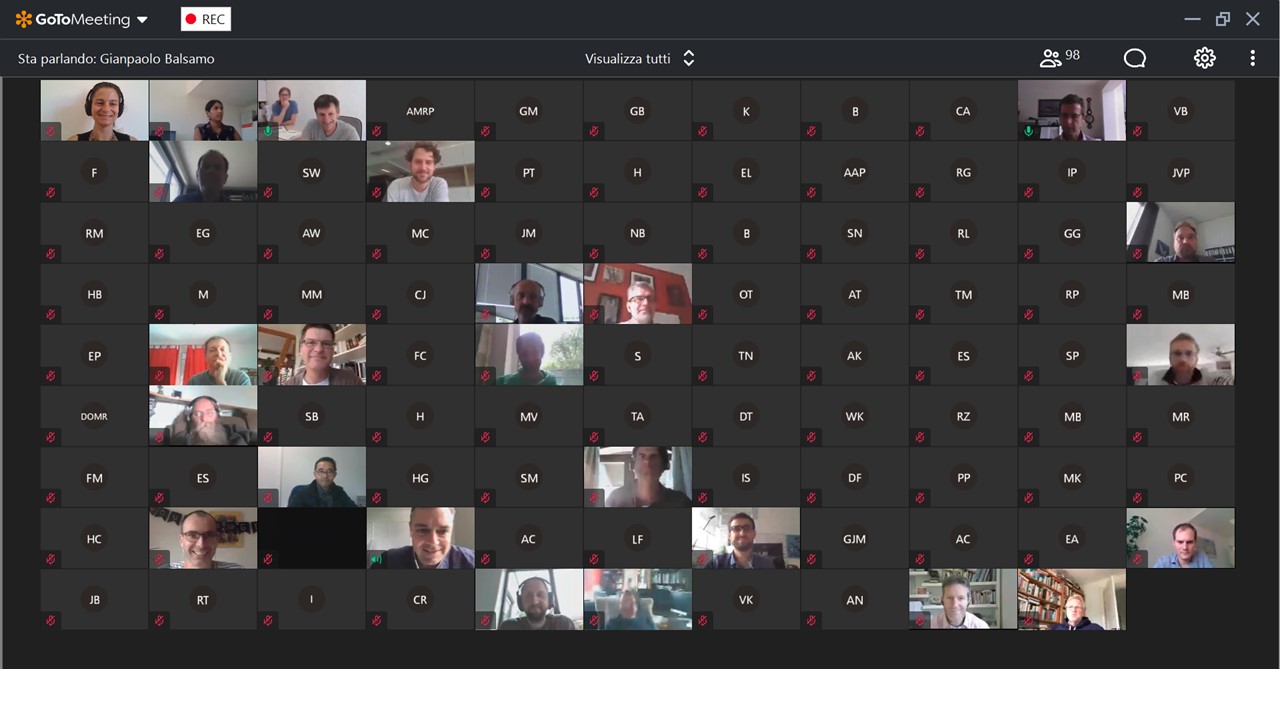
Presentations and discussions documented the progress in understanding the current budget of three major Green House Gazes (CO2, CH4 and N2O) including anthropogenic and natural components with a specific focus on Europe. They also highlighted the developments towards a Copernicus anthropogenic CO2 emissions monitoring & verification support capacity.
You can access to the recorded sessions by clicking on the following links:
- VERIFY work packages summary : https://sharebox.lsce.ipsl.fr/index.php/s/qtr0yOmvXM1cplD
- CHE work packages summary : https://sharebox.lsce.ipsl.fr/index.php/s/hq9E6hWMIInKoD3
- VERIFY GHG synthesis : https://sharebox.lsce.ipsl.fr/index.php/s/CfAFJOw3xNWF22I
- COVID-19 and GHG emissions : https://sharebox.lsce.ipsl.fr/index.php/s/RMbm40gihwemfcL
- Next steps for VERIFY & CHE / links with CoCO2 : https://sharebox.lsce.ipsl.fr/index.php/s/Wg6fRHZazzcvWMc
The detailed agenda and the presentations are also available online.
On the first day, two sessions were dedicated to reporting the major achievements of the VERIFY and CHE projects in the past year. The VERIFY work package leaders highlighted the work performed on flux estimations over Europe for CO2 (fossil and natural), CH4 and N2O, on the GHG synthesis activities, on the links between the inventory community and the climate science community and on the links between VERIFY and international activities.
On the second day, recent progresses for the greenhouse gas emissions (GHG) synthesis for CO2, CH4, and N2O over Europe was presented. The presentations focussed on the use of recent VERIFY specific products but also included two recent publications with pre-VERIFY data (Petrescu et al. 2020 and Andrew 2020). All plots comparing various estimates of GHG fluxes for these syntheses are freely accessible under the web site: http://webportals.ipsl.jussieu.fr/VERIFY/FactSheets/. The afternoon session was dedicated to examine the impact of COVID-19 on greenhouse gas emissions and atmospheric concentrations. During the COVID-19 lockdown, both VERIFY and CHE have responded rapidly to assess this impact documenting a rapid reduction of emissions associated to reduced transport and diminished industrial/power generation activities (see CO2 reductions during COVID-19). New datasets have been produced to monitor the daily variations of fossil fuel using proxy activity data that are crucial for rapid updates, such as during the COVID-19 (see Carbon Monitor Dataset). In addition, in situ observing networks monitoring greenhouse gases, such as FLUXNET and ICOS, provide crucial measurements confirming the anomaly in the first half of 2020.
During the last session, important results were provided on the next steps and community efforts, needed for both the modelling & data assimilation aspects as well as the for the networking between the different communities. A specific focus on land cover change over Europe, the potentially large Eastern European carbon sink, the impact of climate anomalies on CH4 fluxes was also made. Finally, the new H2020 project that will start in 2021 under the acronym of CoCO2 to continue the efforts of CHE and VERIFY projects and in particular the GHG synthesis of VERIFY was presented.